Disclaimer: This is general advice for static caravan buyers and owners. Some details may not apply to our park, so please check with our team before making any decisions. Images used in this article are AI-generated and for illustrative purposes only.
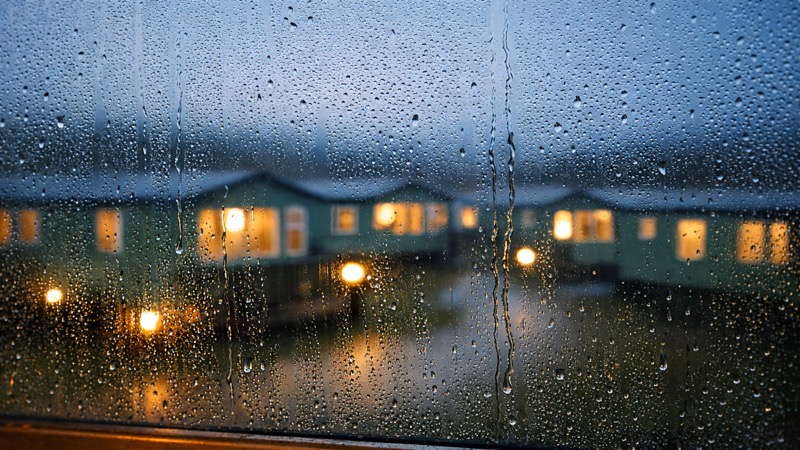
You have been away for a fortnight.
The drive down was good.
The kids are already out of the car.
You put the key in the lock, push the door open, and the first thing that hits you is the smell.
Not terrible. Just... stale.
A faint mustiness hanging in the air that was not there when you left.
Is this normal?
Has something gone wrong?
Should I have done something before I locked up last time?
Here is the reassuring bit.
What you are noticing is caravan condensation, and it happens in every static caravan on every park in the country.
It is not a fault.
It is not damp.
It is physics.
And between you and your caravan's built-in ventilation system, it is entirely manageable.
By the time you finish reading, you will know exactly why moisture builds up between visits, which vents to leave open (and why your instinct to close them is the one thing that makes it worse), and the five-minute leaving routine that keeps your holiday home fresh until your next trip down.
At a Glance
- Why it happens: Warm air meets cold surfaces. It is physics, not a fault
- Your vents: Always open between visits. They are your caravan's lungs
- Before you leave: A five-minute routine keeps everything fresh
- Moisture sources: Cooking and drying clothes produce more moisture than you think
- Dehumidifiers: Desiccant type works in cold caravans. Compressor type does not
- The payoff: Arrive to a fresh, dry holiday home every time
Ads by Salop Caravan Sites
Scroll to continue with content
Why Does Caravan Condensation Happen?
The short answer: Condensation is not a fault.
It is basic physics: warm, moist air meets a cold surface and the moisture turns to water droplets.
Your holiday home shows it more visibly than a house, and the reason is straightforward.
A family of four can produce around 10 to 14 litres of moisture a day, depending on how much cooking, bathing, and clothes drying happens inside.
That is roughly a washing-up bowl to a bowl and a half of water, just from breathing, cooking, bathing, and being at home.
In a house, that moisture disperses across a larger volume and escapes through a dozen different routes.
In a static caravan, the space is smaller and the walls are thinner.
The moisture has fewer places to go.
Most static caravans sold on holiday parks are built to a standard called EN1647, designed for holiday use.
The insulation is lighter than in a residential park home built to BS3632.
Interior surfaces get colder faster, especially when the heating is off.
And when warm, moist air touches a cold surface, the moisture in the air turns to water droplets on that surface.
That is condensation.
Not a leak. Not rising damp.
Not a sign that anything is wrong with your holiday home.
It is the same process that puts water on the outside of a cold glass on a warm day.
EN1647 vs BS3632: what this means for your caravan
Most static caravans on holiday parks are built to EN1647 (the European holiday accommodation standard). Some higher-spec holiday lodges are built to BS3632 (the British residential standard), which has thicker insulation. EN1647 caravans are not inferior. They are designed for a different purpose. But lighter insulation means surfaces cool faster, which is why condensation is more visible in a holiday home than in a house.
We see condensation in static caravans across hundreds of units on our parks every year.
It is completely normal.
The owners who understand why it happens are the ones who manage it with the least effort.
Why Does Your Caravan Have So Many Vents?
The short answer: Your caravan has floor vents, roof vents, and trickle vents in the window frames, and each one has a specific job.
They are not a design flaw.
They are your caravan's ventilation system, put there deliberately by the people who built it.
Thinking about upgrading at Gwynedd Caravan Park?
Talk to us about our new model offers.
If there is one question we hear more than any other from owners, it is this: should I leave the vents open or closed when I am away?
The answer is always open.
Every vent.
Every time you leave.
Your four vent types and what they do
| Vent type |
Where it is |
What it does |
The mistake owners make |
| Floor/underfloor vents |
Beneath the caravan, around the base |
Circulate air under the caravan to prevent moisture in the sub-floor void |
Blocking them with skirting, newspaper, or rags because of draughts |
| Roof vents |
On the roof, usually above the kitchen and bathroom |
Let warm, moist air rise and escape |
Closing them or covering them between visits |
| Trickle vents |
Small slots in the window frames |
Keep background airflow moving through the living space, even when windows are shut |
Taping them shut or sticking draught excluders over them |
| Extractor fans |
In the bathroom and kitchen |
Remove steam and moisture during cooking and bathing |
Not using them, or only using them in winter |
The system works by natural airflow.
Cool, dry air enters through the lower vents and trickle vents.
Warm, moist air rises and exits through the roof vents.
That constant circulation is what stops moisture sitting on surfaces.
Now the part that catches people out.
When owners block the floor vents because they feel a draught, or tape the trickle vents because cold air is coming through, they shut down the entire system.
The moisture has nowhere to go.
It sits on the nearest cold surface.
And then you arrive to musty cupboards and condensation running down the windows.
What your caravan's manufacturer says
ABI's owner's handbook is clear: never block or obstruct your ventilators, even partially.
It goes further.
Damage caused by inadequate ventilation is not covered under warranty.
Swift's owner handbook says the same: under no circumstances should vents be blocked or obstructed.
These are the people who designed and built the caravan.
They put those vents there deliberately.
Important
Your caravan's manufacturer is clear on this: never block, cover, or restrict any ventilation opening. That includes floor vents, roof vents, and the small trickle vents in your window frames. Even between visits. Especially between visits.
Those little vents in your windows are not a gap in the seal.
They are there because your caravan's designers knew you would need them.
What we always tell new owners is this: that draught you feel under your caravan is doing more work than you think.
Five Things to Do Before You Lock Up
The short answer: A five-minute routine before you leave is the single most effective thing you can do to keep your holiday home fresh between visits.
Five things.
Five minutes.
And every return feels better for it.
Thinking about upgrading at Gwynedd Caravan Park?
Talk to us about our new model offers.
Owners with a routine all say the same thing: once you have done it a few times, it becomes second nature.
This is the routine.
-
Check all vents are open and unobstructed. Walk the caravan and confirm trickle vents are in the open position, floor vents are clear of anything pushed against them, and roof vents are not closed.
Takes 60 seconds.
-
Wipe down any visible window condensation. Sills too, and any cold surfaces where water has gathered.
You are removing the moisture that is already there before you close the door.
A dry cloth or kitchen roll is all you need.
-
Pull furniture away from exterior walls. Leave a gap of a couple of inches between the furniture and the wall.
Air cannot circulate between a sofa back and an outside wall.
That hidden gap is where mould develops unseen.
-
Take wet items home. Wet towels, damp cloths, washing that did not dry fully.
Do not leave moisture sources sitting in a closed space for two weeks.
-
Leave internal doors open. Bedrooms, bathroom, kitchen.
Air needs to move through the whole caravan, not get trapped in individual rooms.
That is it.
No specialist equipment.
No crawling under the caravan.
No maintenance skills required.
Real-world tip
Print this checklist and keep it in your caravan's welcome folder. After a couple of visits, you will not need it. But for your first few times, it helps to have it where you can see it.
Every autumn, our park managers walk new owners through exactly this routine.
The owners who follow it are the ones who arrive back to a fresh, dry holiday home every time.
This routine follows principles from the National Caravan Council's condensation guidance, which applies across all types of caravan and holiday home.
For the full seasonal close-down routine, including the steps for longer winter breaks, see our end-of-season guide.
The Moisture You Do Not See
The short answer: Cooking, showering, and drying clothes inside your caravan produce litres of moisture that have to go somewhere.
Most of it ends up on the nearest cold surface.
You come back after a long weekend and find small dark spots on the curtain lining.
Everything smells faintly of laundry.
The windows are running wet.
Nothing has leaked.
Nothing is broken.
So what happened?
The answer is simpler than you think.
And once you know, it is the easiest habit to change.
The biggest culprit nobody warns you about
A single load of washing dried inside the caravan releases up to five litres of moisture into the air.
Five litres.
In a space the size of your living room.
That moisture has to go somewhere.
Without ventilation, it condenses on windows, walls, curtains, and the undersides of mattresses.
We have seen caravans where owners dried clothes on the radiators over a long weekend and came back the following visit to mould spots on the soft furnishings.
Not because they did anything wrong. Just because they did not know how much moisture a single load of washing puts out.
It is the one thing forum owners wish they had known earlier.
| Activity |
Moisture produced |
What to do instead |
| Drying a load of washing indoors |
Up to 5 litres |
Dry in the bathroom with the extractor on and a window cracked, or take wet clothes home |
| Cooking (across all meals in a day) |
Up to 3 litres per day |
Run the extractor fan every time you use the hob. Every time, even in summer |
| A shower |
Approximately 1.5 litres |
Run the extractor fan during and for 10 minutes after. Wipe down tiles and the shower screen |
| Breathing (two adults, overnight) |
Around 1 litre |
Keep at least one trickle vent open in the bedroom |
The extractor fan is the hardest-working appliance in your caravan.
Give it a job to do every time you use the kitchen or bathroom.
Warning
Drying clothes on a radiator inside a sealed caravan is the fastest way to create a condensation problem. Take wet clothes home, or dry them in the bathroom with the extractor fan on and a window cracked.
But here is the part that feels wrong.
Opening a window for five minutes after cooking, even in cold weather, removes more moisture than leaving the caravan sealed all evening.
Cold air coming in feels like you are making things worse.
But cold air is dry air.
It replaces the warm, wet air from cooking.
And that exchange is exactly how static caravan ventilation works.
Does Putting the Heating On Get Rid of Condensation?
The short answer: Heating helps, but only when ventilation is working alongside it.
Heating warms surfaces so condensation does not form. Ventilation removes the moisture from the air.
Without both, you are only doing half the job.
Some owners wonder whether leaving the heating on could replace the need for ventilation.
It cannot.
Here is why.
Heating stops surfaces getting cold.
Condensation only forms on surfaces that are colder than the air around them, so warmer surfaces mean fewer water droplets on your walls and windows.
A low background heating setting between visits keeps surfaces above the dew point where condensation forms.
But heating alone, without ventilation, just warms the moist air.
The moisture is still in the room.
The moment the heating cycles off, surfaces cool, and the condensation returns.
Our maintenance teams have walked into units where the central heating was still running and every vent and window was sealed shut.
The heating was working.
The ventilation was not.
And so the moisture had nowhere to go.
Important: Heating and ventilation are partners
Heating and ventilation are partners, not alternatives. One without the other does half the job. Heating prevents cold surfaces. Ventilation removes moisture. Together, they keep your holiday home dry.
For the full picture on heating your holiday home efficiently between visits, see our guide to smarter heating.
The two work together.
This article covers the ventilation half.
That one covers the heating half.
Between them, you have the complete picture.
Should You Use a Dehumidifier in a Static Caravan?
The short answer: A dehumidifier can help, but the type matters.
A desiccant model works in cold, unheated spaces. A standard compressor model stops working properly below about 15 degrees, which is most of the time in an empty caravan.
If you only remember one thing from this section: desiccant, not compressor.
It is the difference between a dehumidifier that works and one that sits there drawing power and doing nothing.
A desiccant model costs between £150 and £300 and runs at around £10 to £20 per month at typical between-visits usage.
For context, the average escape-of-water insurance claim on a static caravan was £3,298 in 2022, according to Compass Insurance.
Not the worst case.
The average.
And most standard policies do not cover gradual damp or condensation damage.
Only sudden, accidental events like burst pipes are typically covered.
Your insurance covers the unexpected.
Your ventilation routine covers everything else.
A dehumidifier is not the whole answer, though.
Vents must still be open.
The leaving routine still matters.
Think of a dehumidifier as a useful extra pair of hands, not a replacement for the system your caravan already has.
Moisture absorbers, salt, and other helpers
Moisture absorber sachets, silica gel, and the folk remedy of a bowl of salt all work on the same principle: they are hygroscopic, meaning they absorb moisture from the air.
They are useful in enclosed spaces like wardrobes, cupboards, and storage lockers where air does not circulate well.
But they saturate fast, need replacing regularly, and absorb a fraction of what ventilation or a dehumidifier handles.
Salt in a bowl will not hurt.
But it will not replace open air vents and airflow.
Think of it as a helper, not a hero.
| Tool |
Best for |
Limitations |
| Desiccant dehumidifier |
Whole-caravan moisture removal between visits |
Costs £150-300 plus running costs. Needs an electricity supply |
| Moisture absorber sachets |
Wardrobes, cupboards, enclosed storage |
Saturates in days. Small capacity. Needs regular replacing |
| Bowl of salt or cat litter |
A small room or cupboard |
Very small capacity. Saturates quickly. Supplement, not solution |
Real-world tip
If your dehumidifier fills its tank in two days, do not worry. It is showing you how much moisture was sitting in the air. A full tank means it is doing exactly what it should.
In our experience, the owners who combine a simple leaving routine with good ventilation habits rarely feel the need for a dehumidifier at all.
But for owners whose caravan sits empty for several weeks at a time, or for those on coastal parks where the air carries more moisture, a desiccant model is worth considering.
Quick Answers
Should you wipe condensation off windows?
Yes. Wipe it away and dry the sill. Moisture sitting on surfaces is what causes problems over time. A quick wipe takes seconds and stops water pooling on frames and sealant.
Do static caravans suffer from damp?
Condensation in static caravans is normal. It is not the same as damp. Condensation is moisture in the air meeting a cold surface. A simple ventilation routine prevents it from becoming anything more serious. If you suspect actual water ingress rather than condensation, speak to your park manager for an inspection.
Does a bowl of table salt help condensation?
Salt absorbs a small amount of moisture from the air, so yes, it does something. But it saturates fast, needs replacing, and handles a fraction of what ventilation or a dehumidifier manages. Think of it as a helper, not a hero.
Can I use my caravan in winter without condensation?
You can enjoy your holiday home year-round. Some condensation during cold weather is normal. Use your extractor fans, keep vents open, and wipe down cold surfaces. A low background heating setting between visits stops surfaces getting cold enough for heavy condensation. See our smarter heating guide for more detail.
The first time you think about all of this, it feels like a lot to remember.
By the second season, the routine takes five minutes.
By the third, it is just something you do before you lock up. One of the small rhythms of owning a holiday home.
A few good habits, and caravan condensation stops being something you think about.
Every return feels like the first day of a holiday.
For more on keeping your holiday home looking its best inside and out, see our guide to keeping things showroom-fresh.
If you have questions about ventilation, your park's heating system, or anything else about keeping your holiday home in good shape, your park team is always happy to help.
Nobody minds you asking.
Thinking about upgrading at Gwynedd Caravan Park?
Talk to us about our new model offers.
Disclaimer: This is general advice for static caravan buyers and owners. Some details may not apply to our park, so please check with our team before making any decisions. Images used in this article are AI-generated and for illustrative purposes only.