Disclaimer: This is general advice for static caravan buyers and owners. Some details may not apply to our park, so please check with our team before making any decisions. Images used in this article are AI-generated and for illustrative purposes only.
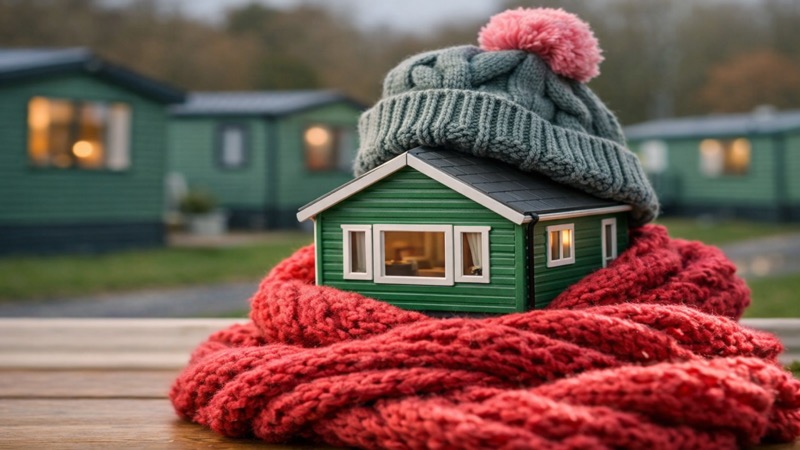
Picture this.
You pull onto the park on a Friday evening.
Key in the lock. Door swings open.
Warm air.
The heating has been on for two hours already.
You sent a text from the motorway, and the holiday home did the rest.
The kettle goes on. The bags come in.
The weekend starts right there, in that first breath.
That is what keeping a static caravan warm looks like when you think ahead.
Not complicated technology. Not a major project.
Just a few practical choices that mean your holiday home is warm and ready the moment you arrive.
By the time you finish reading, you will know exactly how to make that happen.
From quick wins you can do this weekend to smart controls that warm the place before you even leave home.
And the 10-minute setup that owners across our parks say changed their Friday evenings for good.
At a Glance
- Quick comfort wins: Simple changes that make a noticeable difference
- Bedroom warmth: Electric blankets and the right bedding setup
- Remote heat, no WiFi: Text-message switches that work on mobile signal
- Smart app control: Turn the heating on from your phone
- Between visits: Frost protection and keeping things fresh
- Your central heating: Getting the most from what is already fitted
Ads by Salop Caravan Sites
Scroll to continue with content
In This Article
- Quick Wins That Make a Real Difference
- Making Bedrooms Warm and Inviting
- Turning the Heating On Before You Arrive, Without WiFi
- Smart Heating You Can Control From Your Phone
- Protecting Your Caravan Between Visits
- Getting the Most From Your Central Heating
- Common Questions About Static Caravan Heating
Quick Wins That Make a Real Difference
The short answer: You do not need any new technology to make your holiday home noticeably warmer.
A few simple changes, most of them five-minute jobs, can transform how quickly the place heats up when you arrive.
Start with your thermostatic radiator valves.
If your TRVs have not been turned in months, they can seize.
A stuck valve means a radiator that is either permanently on or barely working at all.
Twist each one through its full range, from zero to maximum and back again.
According to Morco's guidance, TRVs should be exercised regularly to keep them responsive.
We see this every season.
An owner mentions that one bedroom never seems to warm up.
Nine times out of ten, it is a valve that has not been moved since the unit was sited.
Next: furniture.
Sofas pushed against radiators. Curtains draped over them.
Beds shoved right up to the panel.
We see it across our parks more often than you would think.
Pull everything a few inches clear and the warm air can actually reach the room.
It sounds obvious.
The difference in how quickly the space heats up is anything but.
Thermal curtains make more difference than most people expect, particularly on older models with single glazing.
Lined curtains across windows and the front door hold warmth in and reduce draughts noticeably.
Thick rugs on bare floors help too.
Caravan flooring, particularly vinyl, feels cold underfoot in cooler months.
A rug in the living area and one beside each bed changes the feel of the entire room.
And while you are checking things off, run your hand around door seals, window seals, and any gaps where pipes enter.
If you can feel a draught, self-adhesive foam strip sorts it in minutes.
Real-world tip
A five-minute TRV check at the start of each season keeps your radiators working properly all year. Twist each valve through its full range. If one feels stiff or stuck, your park manager can take a look.
| What to do |
Why it helps |
| Twist each TRV through its full range |
Prevents stuck valves and cold radiators |
| Move furniture away from radiators |
Heat reaches the room, not the back of the sofa |
| Fit thermal curtains |
Reduces heat loss through windows and doors |
| Add thick rugs to bare floors |
Warmer underfoot and better heat retention |
| Check door and window seals |
Stops draughts that undermine the heating |
Not one of these requires a tradesperson or a weekend project.
Most owners who try them notice the difference the same evening.
Making Bedrooms Warm and Inviting
You have driven for two hours. The living room is warming up nicely.
Now imagine walking into the bedroom, pulling back the duvet, and climbing into a bed that is already warm.
That is the difference an electric blanket makes.
The short answer: An electric blanket is the single most recommended comfort item among static caravan owners.
Switch it on when you arrive, and by bedtime you are climbing into genuine warmth.
- Under-blankets
- Over-blankets
- Heated mattress toppers
- Heated throws
The variety is huge.
The principle is simple: switch it on when you walk through the door, and the bed is ready when you are.
Owners across our parks are genuinely enthusiastic about them.
The phrase that keeps coming back is "an absolute must."
Thinking about upgrading at Gwynedd Caravan Park?
Talk to us about our new model offers.
Pair it with a proper winter-weight duvet, 13.5 tog or higher, and the bedroom becomes one of the warmest rooms in the holiday home.
Leave a dedicated winter duvet at the holiday home.
It is ready when you are, every visit.
For background heat overnight, an oil-filled radiator is hard to beat.
Quiet. Thermostat-controlled. Holds a steady temperature through the night.
Modern oil-filled radiators with a built-in thermostat and overheat protection are generally considered safe to leave on while you sleep. Just keep them on a flat surface, away from soft furnishings, and plugged directly into a wall socket.
Owners who use them in bedrooms all describe the same thing: warm when you wake up, comfortable all night, not a sound.
A hot water bottle still works, too.
Simple, comforting, no installation needed.
There is a reason it has never gone out of fashion.
Real-world tip
Turn the electric blanket on when you first arrive. By the time you have had dinner and a cup of tea, the bed is warm and waiting.
The combination of a heated blanket, a thick duvet, and gentle background heat from a radiator means even the coldest weekend feels comfortable from the first night.
No more rummaging through the cupboard for spare blankets.
Turning the Heating On Before You Arrive, Without WiFi
With a single text message from your phone, your holiday home's heating turns on.
The short answer: If your park's WiFi is patchy, or there is no WiFi at all, a GSM text-message switch lets you turn the heating on by sending a text from your phone.
It works on mobile signal, and setup takes about 10 minutes.
Now here is the one that catches people off guard.
Owners who discover it wish they had known about it years ago.
How GSM Text-Message Switches Work
A GSM switch takes a standard pay-as-you-go SIM card.
You wire it into a socket or plug it in, send a text, and the heating turns on.
Send another text, it turns off.
No internet connection needed. No app.
Just a text message.
The switch receives your text via mobile signal, the same way your phone gets a call, and triggers the heater.
We have owners who text their holiday home from the car park at work on a Friday afternoon.
By the time they arrive, the place has had a couple of hours of warmth and the chill is completely gone.
One thing worth knowing: pay-as-you-go SIM cards need a small top-up or some activity every six months or so to stay active. Check your network's rules, but a couple of pounds keeps the system running all season.
Timer Plugs and Smart Plugs
If you arrive at roughly the same time each week, a timer plug is even simpler.
Set it to switch a heater on a few hours before your usual arrival time.
Mechanical or digital, both work.
Less flexible than a GSM switch, because it runs on a fixed schedule rather than on demand.
But for owners with a regular Friday-evening routine, it does the job reliably.
A smart plug, like a TP-Link Tapo, takes it a step further.
Control a heater from your phone, set schedules, or switch it on when you are ready to leave home.
Smart plugs need WiFi at the park.
If you have a reliable connection, they are a good option.
Alde Smart Control for Alde-Fitted Caravans
If your holiday home has an Alde heating system, their Smart Control app works via SMS, not WiFi.
Turn the heating on, adjust the temperature, and check the power status.
All by text message through the app.
Built for exactly this scenario: owners who want to warm their holiday home before they arrive, on parks where WiFi is not always dependable.
Important
Have a quick chat with your park manager before installing anything that involves wiring changes. They will be happy to advise on what is suitable for your holiday home and your pitch. Nobody minds you asking.
| Option |
How it works |
Best for |
| GSM text switch |
Send a text, heating turns on via mobile signal |
Parks with no WiFi or patchy signal |
| Timer plug |
Heater switches on at a set time each week |
Owners with a regular arrival routine |
| Smart plug |
App control over WiFi, manual or scheduled |
Parks with reliable WiFi |
| Alde Smart Control |
App sends SMS commands to Alde heating system |
Holiday homes fitted with Alde |
The idea of leaving heating on in static caravan all week is one approach.
But most weekend owners find that turning it on remotely a couple of hours before arrival gives them the same warmth, with none of the worry about a system running unattended for days.
Smart Heating You Can Control From Your Phone
The short answer: If your park has WiFi or you have decent mobile signal, a WiFi thermostat or app-controlled heater lets you turn the heating on, set the temperature, and check that everything is working, all from your phone, wherever you are.
This is the part that changes the whole experience.
Imagine sitting at home on a Friday afternoon.
You open an app on your phone.
Sixty miles away, your holiday home's heating clicks on.
By the time you pull onto the park, the place has been warming for two hours.
You open the door.
Warm air. Dry surfaces.
The weekend begins the moment you step inside.
That is available right now, for static caravans and holiday lodges.
WiFi Thermostats and Programmable Controls
A WiFi thermostat like the Drayton Wiser can be retrofitted to an existing central heating system.
Set schedules.
Adjust the temperature remotely.
Set a minimum frost protection temperature so the system keeps the holiday home above freezing between visits.
According to Morco, holiday home owners are requesting thermostats or programmers to be retro-fitted to their boilers.
The demand is growing because the convenience speaks for itself.
Your park manager can advise on whether a programmable thermostat is compatible with your boiler.
In most cases, the fitting takes a couple of hours.
App-Controlled Electric Radiators
Some electric radiators now come with WiFi and their own apps built in.
The Rointe D Series connects to the Rointe Connect app.
Set the temperature, create schedules, and activate a frost protection mode, all from your phone.
Rointe's system also has a location-based feature that can activate the heating based on your location.
Leave home, and the radiator knows you are on your way.
Herschel Infrared panels work on a similar principle.
Their SmartLife app lets you control heating remotely, set frost protection, and monitor the temperature remotely.
For holiday homes with a Truma heating system, the Truma iNet X adds smartphone control via Bluetooth and remote connect.
It is retrofittable to compatible Truma systems.
The Simple Route: A Smart Plug and an Oil-Filled Radiator
You do not need a new heating system to get remote control.
A smart plug paired with an oil-filled radiator can give you app control of a single heater.
Check that your smart plug is rated for the radiator's wattage, and always use a wall socket rather than an extension lead.
If you would rather avoid an intermediary device altogether, choose a radiator with built-in WiFi and app control instead.
Plug the radiator in.
Connect the smart plug to your phone.
Set the radiator's thermostat to your preferred temperature.
When you want warmth, open the app and switch the plug on.
The radiator heats to its thermostat setting and holds there.
It is not whole-house heating.
But a warm living room or bedroom waiting for you on arrival transforms the first hour of every visit.
Real-world tip
Even a simple smart plug paired with an oil-filled radiator can transform your arrival experience. It is the quickest route to walking into warmth, and you can set it up in five minutes.
What we hear from owners who have set up remote heating, whether a text switch, an app, or a smart plug, is always the same.
It feels like coming home.
Protecting Your Caravan Between Visits
What happens to your holiday home during the week while you are at home?
The short answer: A frost stat or low-temperature setting on your thermostat keeps the temperature just high enough to protect pipes and prevent damp.
Your holiday home quietly looks after itself between visits, so it is ready when you are.
Frost Protection
If the temperature inside the holiday home drops below freezing, water sitting in the pipes can expand and crack fittings.
Pipes are at risk below 0 degrees C.
But you do not need to heat the whole place to living temperature to prevent that.
Most modern static caravan heating systems have a frost protection setting, typically around 5 degrees C.
Switch it on before you leave at the end of each visit.
The boiler fires briefly whenever the temperature drops near that threshold, then switches off again.
If you have fitted a smart thermostat or app-controlled heater, the frost protection often comes built in.
You can check the temperature remotely, too, which is genuinely reassuring during the coldest weeks.
Our park managers see a real difference between holiday homes that have frost protection running and those that do not.
The ones with even a gentle background temperature stay drier, smell fresher, and feel ready to use the moment the owner walks in.
Important
If your holiday home has central heating with a frost protection setting, switch it on before you leave at the end of each visit. Your park manager can show you where to find it on your system.
Ventilation and Moisture Control
Warmth and ventilation work as a pair.
A holiday home sealed tight with no air movement traps moisture.
That is what creates the stale feeling some owners notice after a week or two away.
Keep at least one trickle vent slightly open, even when the holiday home is locked up.
The heating keeps the air above the dew point.
The vent gives the moisture somewhere to go.
Together, they keep things dry and fresh between visits.
A small dehumidifier, or even moisture-absorbing crystals placed in the living area and bedrooms, makes a noticeable difference too.
Owners who use them describe the same thing: the holiday home feels drier, warmer, and fresher on arrival.
One owner told us it was the single biggest improvement they had made to their weekend comfort.
We always tell owners: a little warmth and a little airflow go a long way.
Your holiday home looks after itself between visits if you give it the right conditions.
How to keep caravan warm in winter is as much about keeping things dry as it is about turning the thermostat up.
Getting the Most From Your Central Heating
Good to know
Many modern static caravans come with a full wet central heating system: a boiler, radiators in each room, and hot water. It works much like the one at home. If yours has a different system, speak to your park manager about what is fitted. They will know your model.
The short answer: Your holiday home's central heating works much like the system at home.
Knowing a few basics about how to use it well means the whole place heats up faster and more evenly.
Keeping a static caravan warm comes down to how well you use what is already fitted.
When you first arrive, turn every TRV up to maximum so all radiators fire at once.
This heats the whole structure: walls, furniture, soft furnishings, not just the air.
Once the holiday home is up to temperature, dial back bedrooms or rooms you are not using.
Many owners do not realise their boiler has a built-in timer or programmer.
Worth checking yours.
Setting it to come on an hour before your usual wake-up time means you step out of bed into warmth rather than reaching for a jumper.
Bleeding radiators is a two-minute job that makes a real difference.
If a radiator feels warm at the bottom but cold at the top, trapped air is the cause.
A radiator key and a quick turn of the bleed valve sorts it.
If your holiday home has double glazing and good static caravan insulation, it will hold heat well.
Newer models, particularly those built to the BS 3632 residential specification, are designed for comfortable year-round use.
Some holiday lodges and higher-specification caravans come with underfloor heating, which provides a gentle, even warmth that owners find particularly comfortable in cooler months.
If you are not sure what your system includes, your park manager will know.
Every model is slightly different.
Nobody minds you asking.
Thinking about upgrading at Gwynedd Caravan Park?
Talk to us about our new model offers.
The first time you walk through the door and the heating is already on, you will wonder why you did not do it sooner.
By the second season, it is just how things work.
You text from the car.
You tap the app from the sofa.
You set the timer and forget about it.
The cold first hour disappears.
The weekend starts the moment you arrive.
Keeping a static caravan warm stops being a project and becomes something your holiday home just does.
Your holiday home is ready when you are.
Every time.
Common Questions About Static Caravan Heating
Should I leave the heating on in my static caravan?
You do not need to heat it to living temperature while you are away. A frost stat set to around 5 degrees C protects pipes and prevents damp. For comfort on arrival, turn the heating on remotely a couple of hours before you get there using a text switch, timer plug, or smart app.
How does central heating work in a static caravan?
Many modern static caravans have a wet central heating system: a gas or LPG boiler, radiators in each room, and thermostatic valves to control the temperature per room. It works much like the system at home. Many can now be upgraded with programmable thermostats or smart controls for remote access.
What temperature do caravan pipes freeze at?
Water in pipes begins to freeze at 0 degrees C. Setting your thermostat's frost protection to around 5 degrees C keeps the holiday home safely above that threshold and helps prevent condensation too.
Are static caravans cold in winter?
Modern static caravans with central heating, double glazing, and proper insulation are designed to be comfortable in all seasons. With a few of the practical steps in this article, especially remote heating and good ventilation, you can arrive to a warm, dry holiday home every time.
Thinking about upgrading at Gwynedd Caravan Park?
Talk to us about our new model offers.
Disclaimer: This is general advice for static caravan buyers and owners. Some details may not apply to our park, so please check with our team before making any decisions. Images used in this article are AI-generated and for illustrative purposes only.