Disclaimer: This is general advice for static caravan buyers and owners. Some details may not apply to our park, so please check with our team before making any decisions. Images used in this article are AI-generated and for illustrative purposes only.
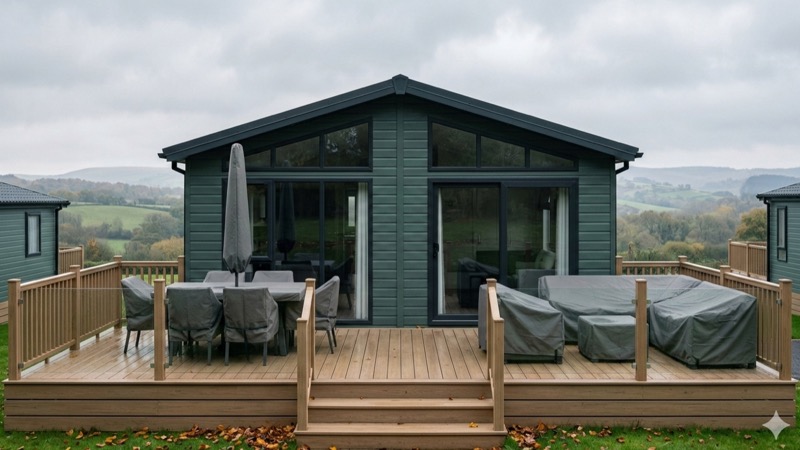
You pull the door shut, check the handle, and walk to the car.
That is when it starts.
Did I lock the back window?
Is the water off?
Should I have left the heating on?
Every owner knows that moment.
The drive home with a quiet question sitting in the back of your mind.
Here is the reassuring bit.
Most of what you need to do before you leave takes less time than making a cup of tea.
At a Glance
| Your 5-minute routine |
A checklist you can run from memory |
| Heating: on or off? |
Depends on the season and your system |
| Leaving for longer |
A few extra steps for multi-week absences |
| Smart tech |
Optional gadgets for extra peace of mind |
| Your park team |
What happens on park between your visits |
| Insurance sorted |
How your routine keeps you covered |
You are already on a managed park with on-site staff.
The lock up and leave routine is your part of the partnership.
Your park team handles the rest.
By the time you finish reading, you will have a simple static caravan checklist you can follow every time you leave, whether that is after a long weekend, a fortnight away, or the end of the season.
The kind of routine experienced owners run in fifteen minutes without thinking, and the one that could save you the cost of a major repair you never needed.
If you are arriving back after a break rather than heading home, our opening-up guide covers what to check on your first visit of the season.
Ads by Salop Caravan Sites
Scroll to continue with content
Your Five-Minute Lock-Up Routine
A basic lock-up routine covers nine steps: kitchen, water, gas, electrics, ventilation, pest prevention, windows, outside, and a final walk-through.
The owners who have been doing this for years barely think about it any more.
They walk through the same rooms, in the same order, every time.
Kitchen first. Then the water. Then a quick lap outside.
Fifteen minutes, and they are done.
You are building that same habit here. Not a chore. A rhythm.
Once it clicks, you will do it on autopilot.
Here is the room-by-room version.
1. Kitchen
Empty the fridge completely and wipe down the shelves.
Leave the fridge door slightly ajar so air circulates inside.
A closed fridge with nothing in it goes musty faster than you would think.
Remove all food from cupboards. Anything in soft packaging — cereal boxes, biscuit packets, crisps — is an open invitation.
Tinned food in sealed metal tins is generally safe, but the real risk is what you forget.
Empty the bins and wipe down the surfaces.
2. Water
Turn off the stopcock.
This is the single most important habit in the entire checklist.
A leak that develops while you are away with the stopcock on can run for days or weeks.
One specialist insurer reported a single escape-of-water claim exceeding £13,000, caused by a pipe that split while the owner was at home.
Turn off the stopcock. Every time. Even for a weekend.
Three seconds. That is all it takes.
3. Gas
Turn off the gas supply at the bottle or meter.
The exception is if you are leaving the heating on in your static caravan over winter on a low frost-protection setting.
In that case, the gas stays on. The heating section below covers when that makes sense.
4. Electrics
Switch off and unplug appliances at the wall.
The fridge is already off with the door ajar.
The TV, microwave, kettle, and any chargers can all come off at the socket.
If you like the look of a lamp on in the evenings, a timer switch does the job for pennies.
5. Ventilation
Leave at least one trickle vent open.
Do not block air vents to keep mice out.
Gas regulations require those vents to remain clear, and modern static caravan units come with meshed vents fitted during production.
Stand cushions and soft furnishings away from external walls.
Cold walls attract condensation, and fabric pressed against them is a recipe for damp patches and mildew.
For the full guide on keeping moisture under control between visits, see our ventilation and condensation article.
6. Pest prevention
No food left behind. Surfaces wiped. Bins empty. Entry points checked.
A clean holiday home with no food in it is an inhospitable place for mice.
We see it every year.
The owners who clear everything out and leave the place spotless never have a problem.
The ones who leave half a packet of biscuits in the cupboard are the ones ringing us in spring.
Real-World Tip
Specialist insurers report that vermin damage claims have risen 171% in recent years, with an average claim cost of £3,649 and one infestation costing £6,725. The good news: a clean departure routine is the most effective prevention.
7. Windows and doors
Check every window latch and lock. Front, back, sides, bathroom.
Now the counterintuitive bit: consider leaving your curtains open.
Daylight coming in prevents mildew on fabrics.
And an obviously unoccupied holiday home with open curtains looks like exactly what it is, rather than somewhere with something hidden behind them.
8. Outside
Secure or store outdoor furniture, barbecues, and anything loose on the decking.
What we always tell owners is this: if you would not leave it out in a gale at home, do not leave it out on the decking.
Check your gutters are clear.
A quick glance along the roofline and the external seams takes thirty seconds and catches problems early.
9. Final walk-through
One lap of the interior. One lap of the exterior.
Sixty seconds.
You will be surprised how often it catches a window latch you missed or a garden chair you forgot to fold.
Then pull the door shut, check the handle, and walk to the car.
This time, you will not need to wonder.
Should You Leave the Heating On in Your Static Caravan?
In summer, turn the heating off and focus on ventilation. In winter, a low frost-protection setting around 5 to 10 degrees prevents condensation and protects your pipes.
This is the question that gets asked more than any other, and the conflicting advice is what makes it stressful.
You have heard different things from different people.
Leave it on low. Turn it all off. It depends on the weather. It depends on the system.
So here is a clear framework you can use every time.
The answer depends on two things: what season it is and how long you are going away.
| Scenario |
Heating |
Water |
Notes |
| Weekend in summer |
Off |
Stopcock off |
Ventilation is your priority |
| Week away in autumn or spring |
Low setting (frost protection, around 5-10C) |
Stopcock off |
Prevents condensation build-up |
| Extended winter absence with drain-down |
Off |
Fully drained |
See our end-of-season close-down guide |
| Extended winter absence without drain-down |
Low setting |
Left running |
Higher running cost, but less effort |
Trickle vents open in summer, cushions upright, air circulating.
A frost-protection setting costs less than most owners expect.
And it costs dramatically less than repairing burst pipes or condensation damage.
What does "low" actually mean?
Here at Gwynedd Caravan Park, we typically suggest somewhere around 5 to 10 degrees. Enough to keep the air moving and prevent moisture settling on cold surfaces.
If you are leaving for several weeks or more in winter, the choice is between a full drain-down (heating off, water system emptied) or keeping everything running on a low setting.
Both work. The drain-down is more thorough.
Keeping the heating on low is less effort.
Our end-of-season close-down guide covers the full winterisation process.
For deeper heating advice, see our guide to smarter caravan heating.
Important
Never drain your central heating system. It is a sealed, pressurised unit with antifreeze built in. Only drain the domestic water supply: taps, shower, toilet cistern. The central heating looks after itself.
If your holiday lodge has a smart thermostat, you can adjust the temperature remotely and check the readings from home.
Some owners find that small comfort becomes one of their favourite features.
Your park manager can tell you what works best for your specific model and your park's setup.
Nobody minds you asking.
Extra Steps When Leaving Your Holiday Home for Longer
If you are leaving for more than a couple of weeks, add these to your standard routine.
None take long, but they make a real difference over an extended absence.
- Moisture traps or a dehumidifier in the bedroom and living area.
Battery or chemical types work when the power is off.
For the full guide, see our ventilation and moisture article.
- Non-toxic antifreeze in U-bends and the toilet bowl after a drain-down.
This prevents any residual water from freezing and cracking the fittings in cold weather.
Use caravan-specific non-toxic antifreeze, not automotive.
- A five-minute seams and seals check.
Run your eye along the external seams, window seals, and door frames.
Water ingress through worn seals is typically not covered by insurance, because it is classified as wear and tear.
This quick visual check is your main line of defence.
- A word with a neighbour.
Many parks have informal arrangements where owners keep an eye on each other's holiday homes.
A quick conversation before you leave costs nothing and adds another layer of reassurance.
- Consider a professional drain-down for winter.
At Gwynedd Caravan Park, our team can advise on drain-down services and costs.
If you prefer DIY, a Floe device and a rechargeable compressor make it quick and reliable — check current prices online.
Our end-of-season close-down guide covers the full process.
Warning
Seams and seals are not typically covered by insurance. Water ingress through worn seals is classified as wear and tear by most insurers. A five-minute visual check before you leave is your main line of defence against the one type of damage your policy probably does not cover.
Worth knowing: the owners who build these extras into their routine say it adds ten minutes at most.
In our experience, the ones who flag a worn seal early are the ones who never have a water ingress problem.
Thinking about upgrading at Gwynedd Caravan Park?
Talk to us about our new model offers.
What Your Park Does Between Your Visits
But what happens when I am not there?
That question sits with most new owners for the first few months. On a managed park, your holiday home is never truly unattended.
Here is what actually happens.
While you are at home during the week, your park does not go quiet.
The paths still get swept. The hedges still get trimmed.
The grounds team is still there, doing the same work they do when the park is full.
On a managed holiday home park, your caravan is never really unattended.
Park managers live on or near the park.
They know which owners are visiting this weekend and which are not due back until next month.
They notice things. An open window after a storm. A loose panel on someone's decking. Noticing is part of the job.
Your fellow owners are part of this too.
On an owners-only park, there is no holiday rental turnover.
The people on the neighbouring pitches are the same people every year.
They know you. You know them.
Some parks have WhatsApp groups.
Others have the quieter version. A wave across the hedge. A text if something looks off.
The parks where owners look out for each other are the parks where problems almost never happen.
Industry data: According to specialist insurer data, around 90% of holiday home insurance claims are caused by weather and wear, not by what happens during the owner's absence. Being away is not the risk. Your departure routine handles the preventable causes. Your park team handles the rest.
That is the real reassurance.
You are not leaving your holiday home alone.
You are leaving it in a community that keeps going whether you are there or not.
Smart Tech for Extra Peace of Mind
None of these are essential.
Your lockup routine and your park team are the main layers.
But for some owners, the extra visibility is a comfort.
Can I actually check on my caravan from home?
You can. And it is more affordable than most people expect.
- Temperature and humidity sensors alert you if the temperature drops below a threshold or humidity rises.
Battery-powered, SIM-based options work without WiFi.
- Leak detectors placed under sinks and near the water heater.
They alert you before a minor drip becomes a major problem.
- WiFi or SIM-based cameras. Check your park's rules before installing.
Some parks have restrictions on external cameras.
Battery-powered options avoid wiring issues.
- Smart plugs and timer switches schedule a lamp to turn on in the evenings.
Real-World Tip
Check which mobile network gets the best signal on your park before buying any SIM-based device. WiFi may not be available year-round, so a SIM-based sensor on a strong network is often more reliable than WiFi.
What we hear from owners who use these gadgets is always the same thing.
A quick glance at the temperature reading on a cold morning, and they know everything is fine.
It turns into a comforting habit rather than a worry.
How Your Lockup Routine Keeps You Insured
Most static caravan insurance policies have conditions about how you leave your holiday home between visits.
If you follow the routine in this article, you are already meeting them.
Typical policy conditions include:
- Secure all doors and windows before leaving
- Remove valuables from sight
- Turn off the water supply
- Maintain ventilation
- Keep the holiday home in a good state of repair
That last one is why the seams and seals check matters.
Insurers expect the structure to be maintained.
But here is the part that catches some owners out: what their policy does not cover.
Damp and mould are usually not covered.
Insurers classify them as maintenance issues, not insurable events.
Your ventilation and departure routine is your main protection there.
Vermin damage is not covered by every policy either. Some specialist providers include it. Many do not.
Worth checking yours.
Important
Damp, mould, and water ingress through worn seams are typically not covered by static caravan insurance. Your departure routine — especially ventilation and the seams check — is your main protection against the damage your policy will not pay for.
The honest truth is this: you are not following the routine to satisfy your insurer.
You are doing it because it is good practice.
The fact that it also keeps you covered is a bonus.
Common Questions About Leaving Your Static Caravan
Should I leave the heating on in my static caravan between visits?
It depends on the season. In summer, turn it off. In winter, a low frost-protection setting (around 5-10C) prevents condensation and protects your water system. For a full winter close-down with drain-down, turn the heating off. See the heating section above for a detailed breakdown.
Do I need to drain the water system every time I leave?
No. For short absences, turning off the stopcock is enough. A full drain-down is only needed for extended winter absences. Our end-of-season close-down guide covers the complete winterisation process.
How do I stop damp in my static caravan when I am not there?
Leave trickle vents open, stand soft furnishings away from external walls, and consider placing moisture traps in the bedroom and living area. Our ventilation and condensation guide has the full detail.
Is it safe to leave my static caravan empty for a few weeks?
Yes, especially on a managed park with on-site staff. Your departure routine covers the preventable risks. Your park team and fellow owners provide additional oversight between visits.
What should I do about mice and vermin?
Remove all food, wipe down surfaces, empty bins, and make sure vents are meshed rather than blocked. Gas regulations require vents to remain clear. A clean holiday home with no food is an inhospitable place for mice.
Should I leave curtains open or closed?
Open is often the better choice. Daylight prevents mildew on fabrics. It also signals the caravan is simply unoccupied rather than concealing contents.
The first time you run through this checklist, it will feel like a lot.
By the second or third visit, it is just what you do.
By the end of the season, you will not need this article at all.
You will do it from memory, the same way you check the locks at home before bed.
You are on a managed park. Your park team is there between your visits.
Your neighbours know you. You know them.
You are not leaving your holiday home alone.
You are leaving it in good hands.
You have a routine for leaving your static caravan between visits. One that works.
Next time you pull the door shut and walk to the car, you will not need to wonder.
You will know.
If you are ever unsure about any step, especially drain-down procedures or heating settings, your park manager is the best person to ask.
They know your park, your systems, and your specific setup.
Nobody minds you checking.
Thinking about upgrading at Gwynedd Caravan Park?
Talk to us about our new model offers.
Disclaimer: This is general advice for static caravan buyers and owners. Some details may not apply to our park, so please check with our team before making any decisions. Images used in this article are AI-generated and for illustrative purposes only.